THE CART DOCTOR | INTERACTIVE PROTOTYPE
The Problem
Shopping carts break, and nobody knows what to do. Broken carts create frustration, inefficiency, and abandoned trips—but there’s no clear system for repair or guidance. The problem isn’t just usability; it’s the lack of care, attention, and structure around a ubiquitous object we rely on daily.
The Solution
The Cart Doctor: Interactive Prototype reimagines the broken cart experience as an actionable, guided system. Through an interactive prototype, users can diagnose issues, receive instructions, and visualize solutions—turning confusion into clarity. The project transforms an everyday point of frustration into a playful, functional interaction that empowers users to take control, making broken carts repairable instead of abandoned.
Research:
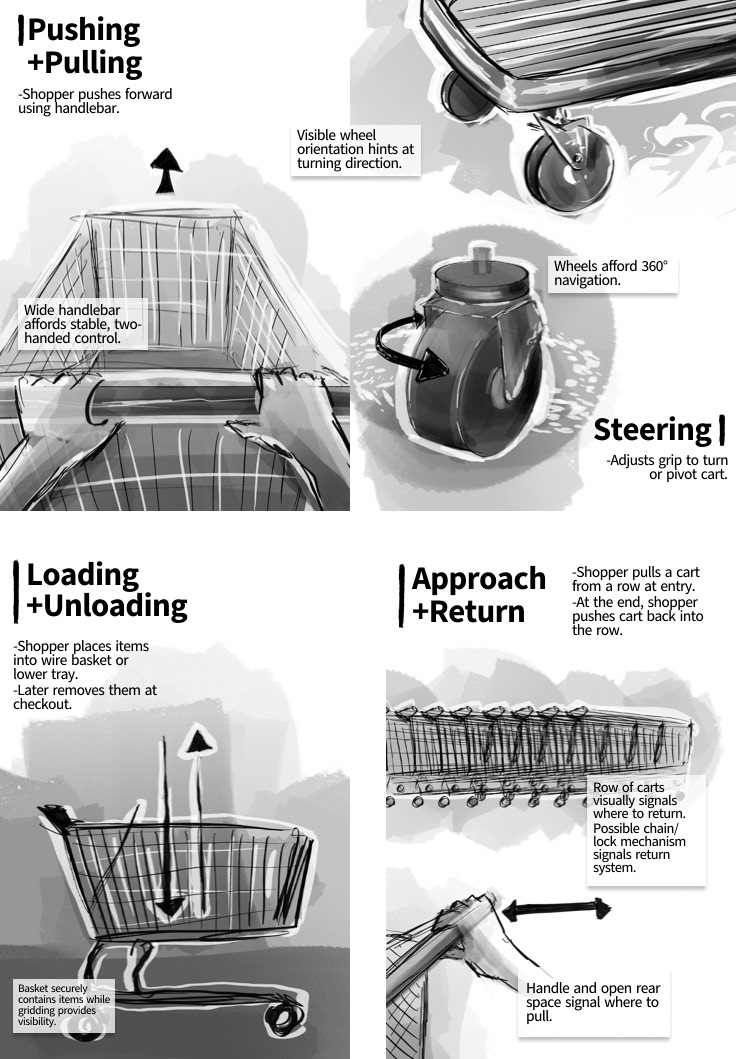
Deconstruction
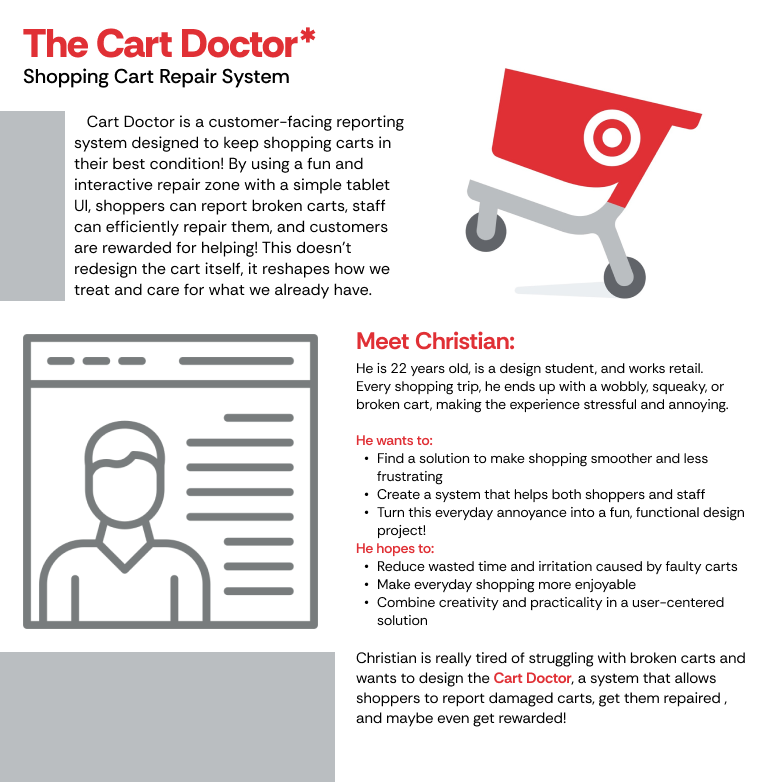
Persona
Prototyping:
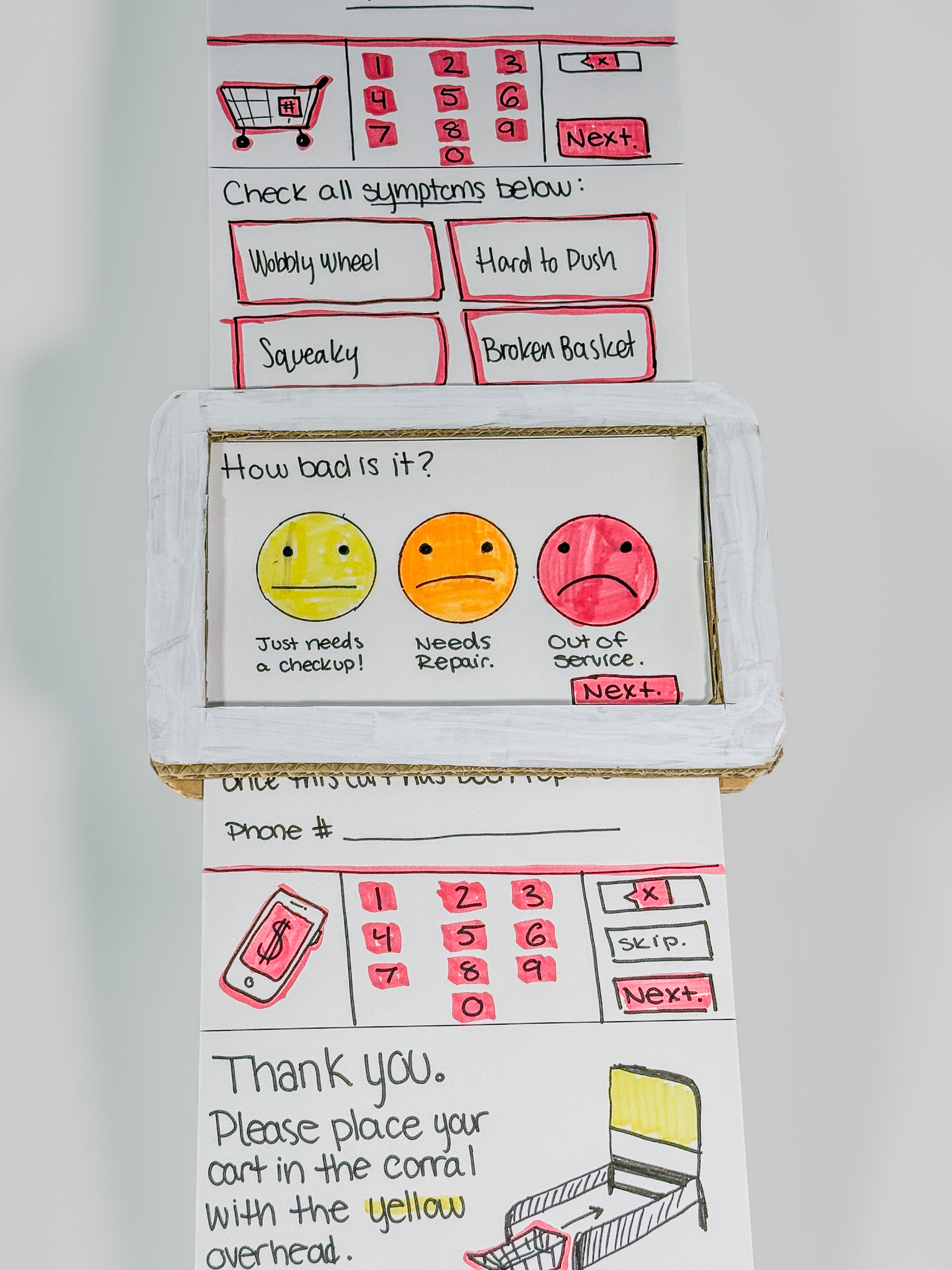
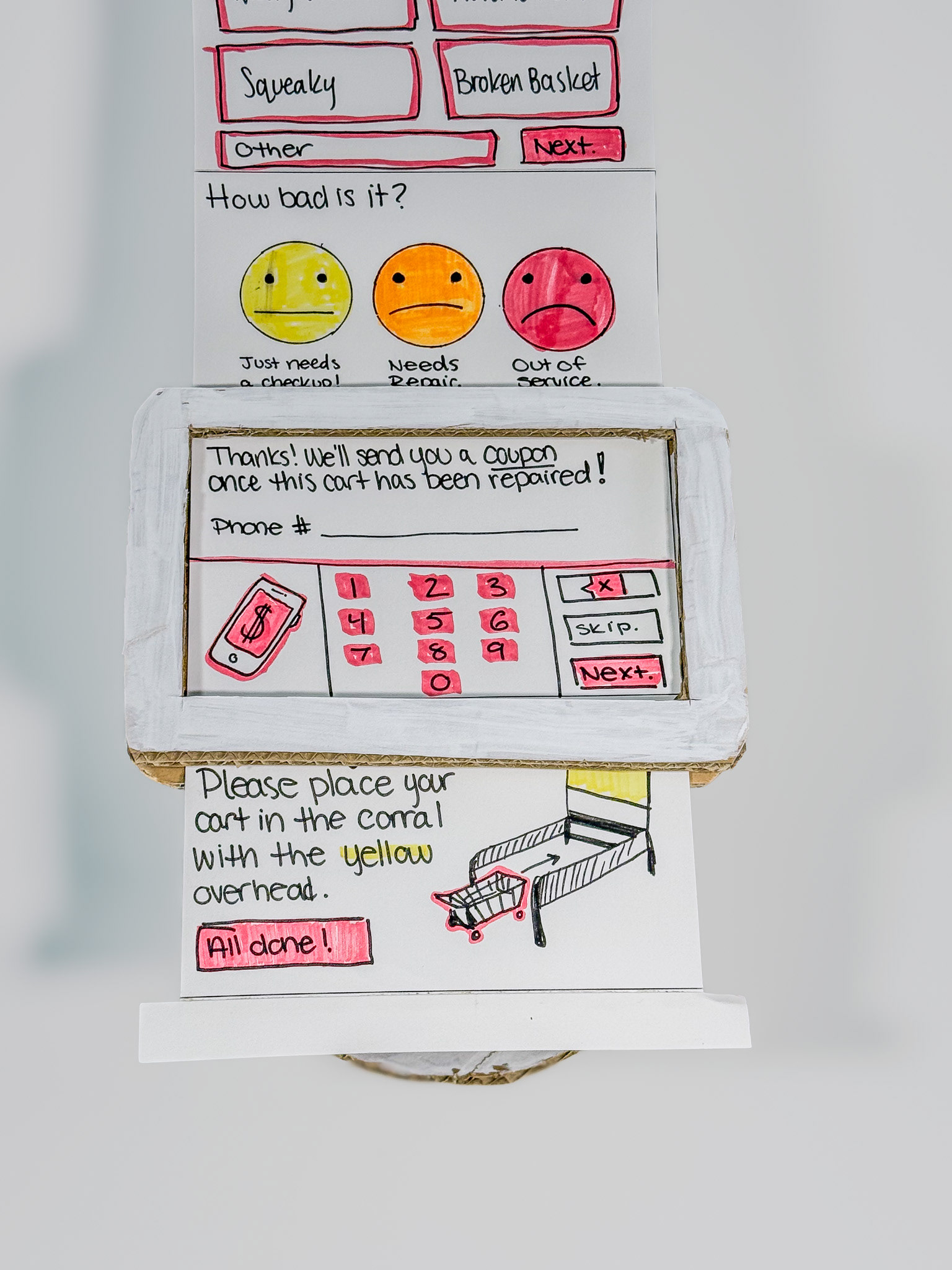
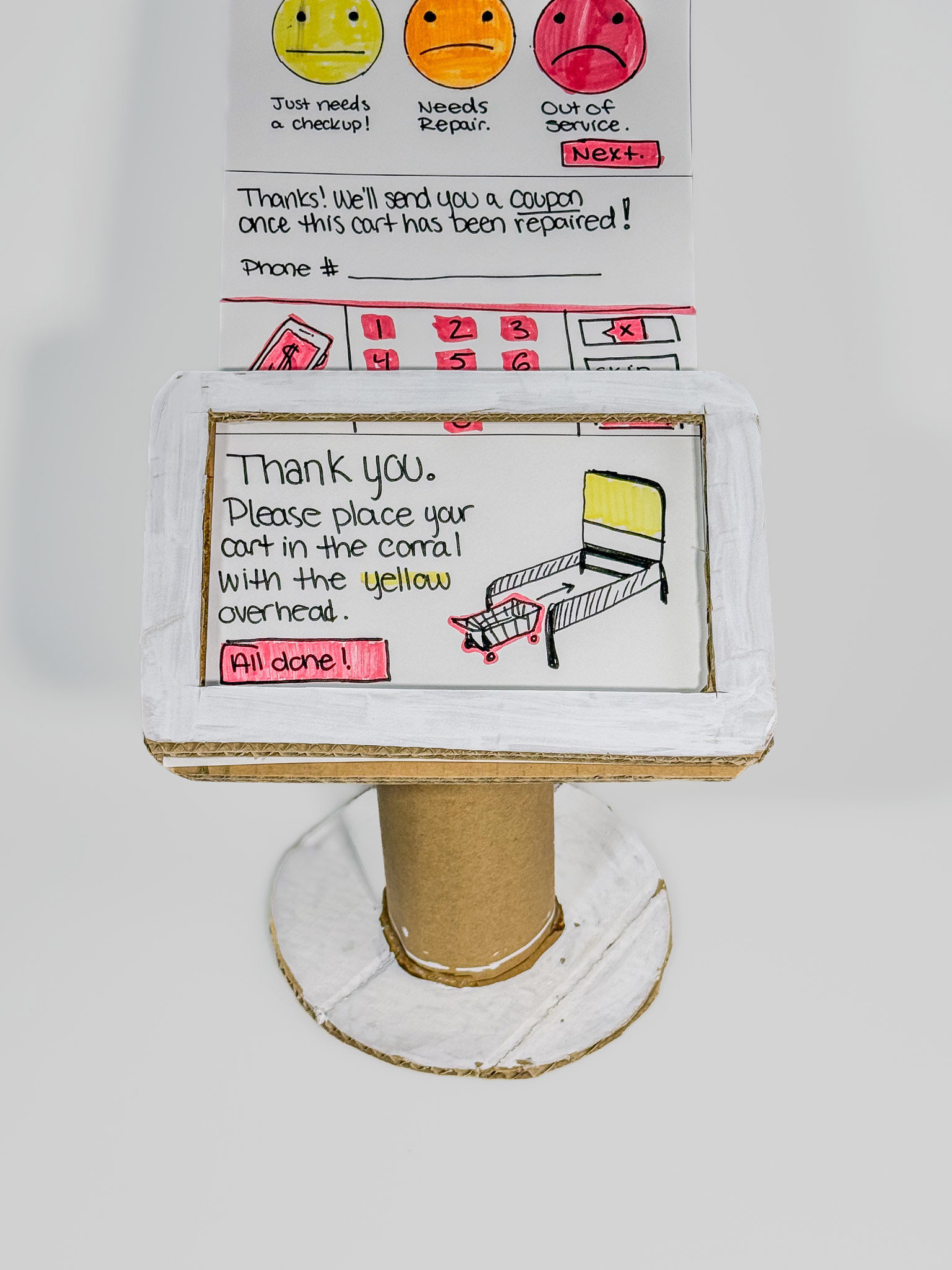
UI Step by Step
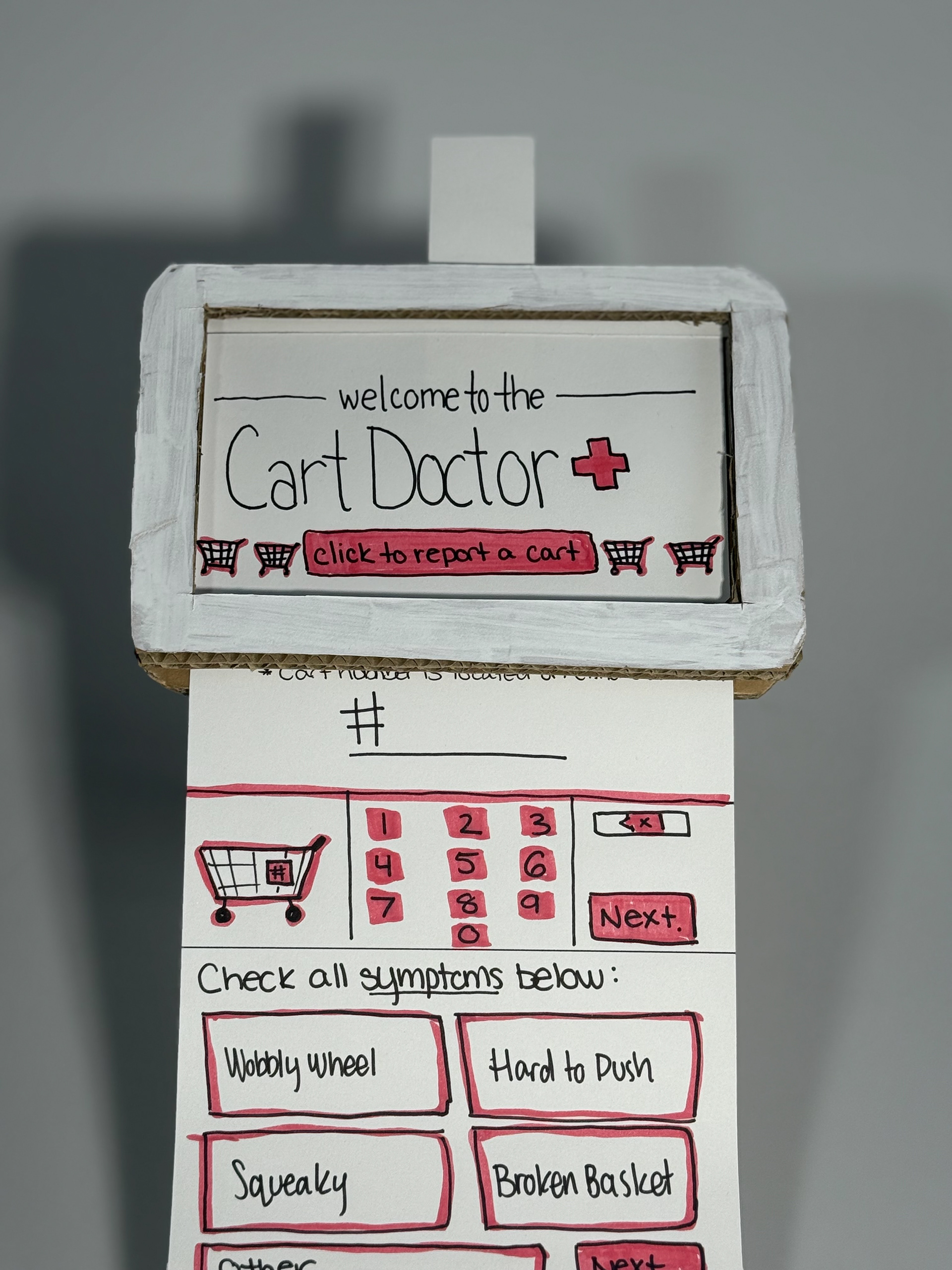
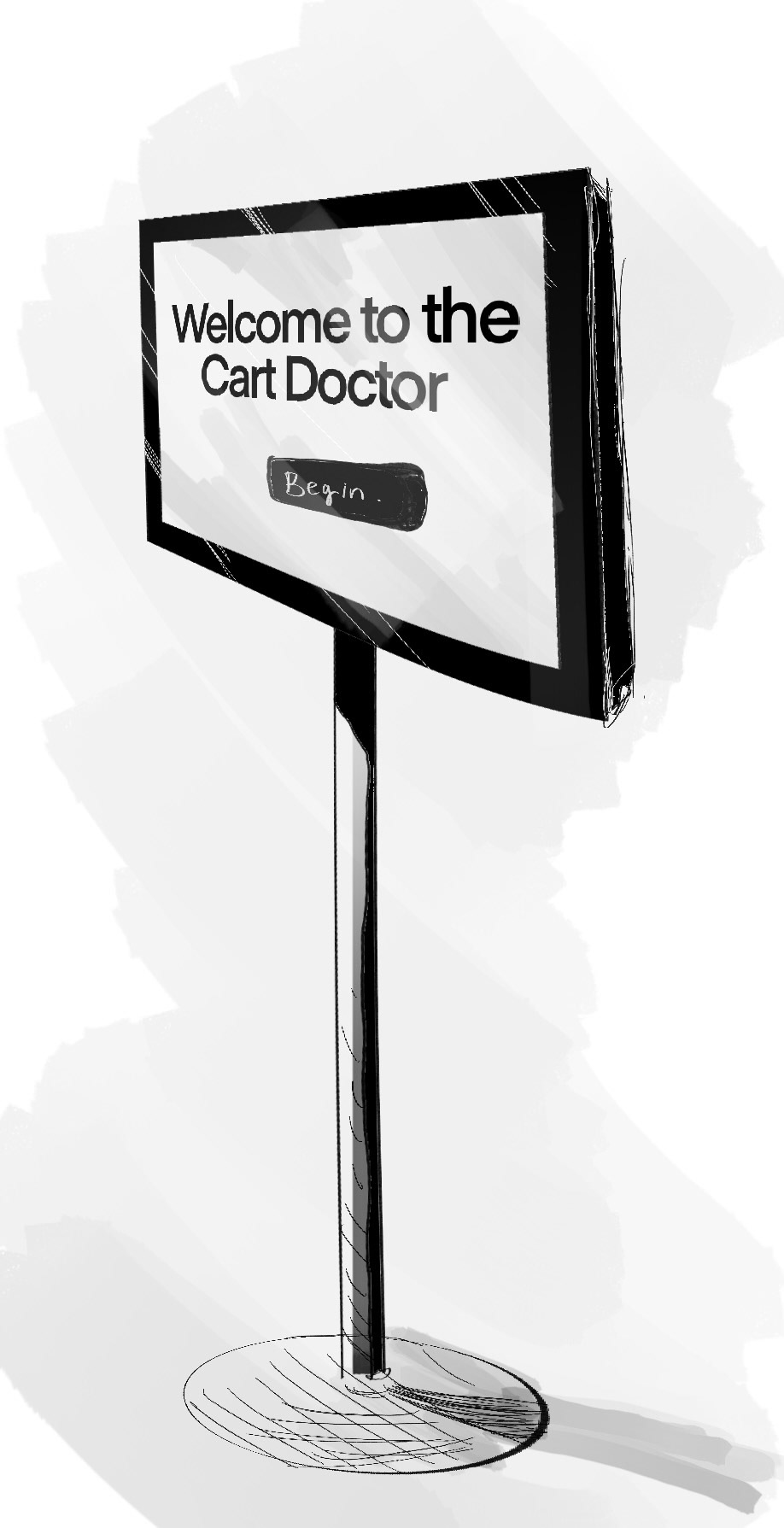
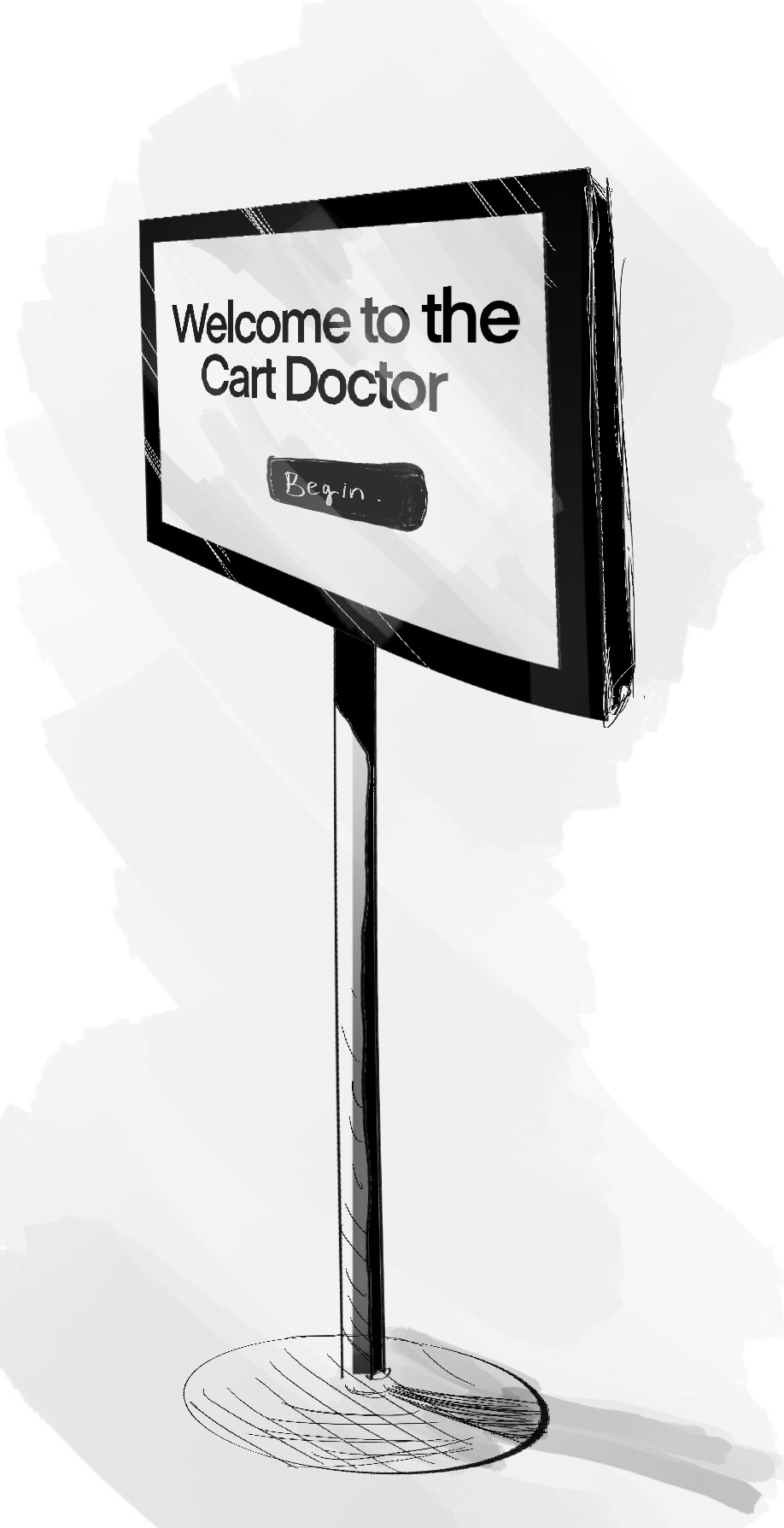
1. Welcome
“Report a Broken Cart”
2. Cart number
Enter Cart # (each cart will be labeled with number)
3. What’s wrong?
Wobbly wheel
Hard to push
Squeaky
Basket broken
Other
4. How bad is it?
Just a check-up
Needs repair
Out of service
5. Contact Info for Reward
“We’ll send you a coupon once this cart has been repaired!”
Type in phone number
Skip button available.
6. Final Step — Park the Cart
“Thanks! Please place Cart # in the Cart Waiting Room”
Visual: arrow showing a cart rolling into the corral.
“We’ll text you once it’s healed!”
Paper Prototype
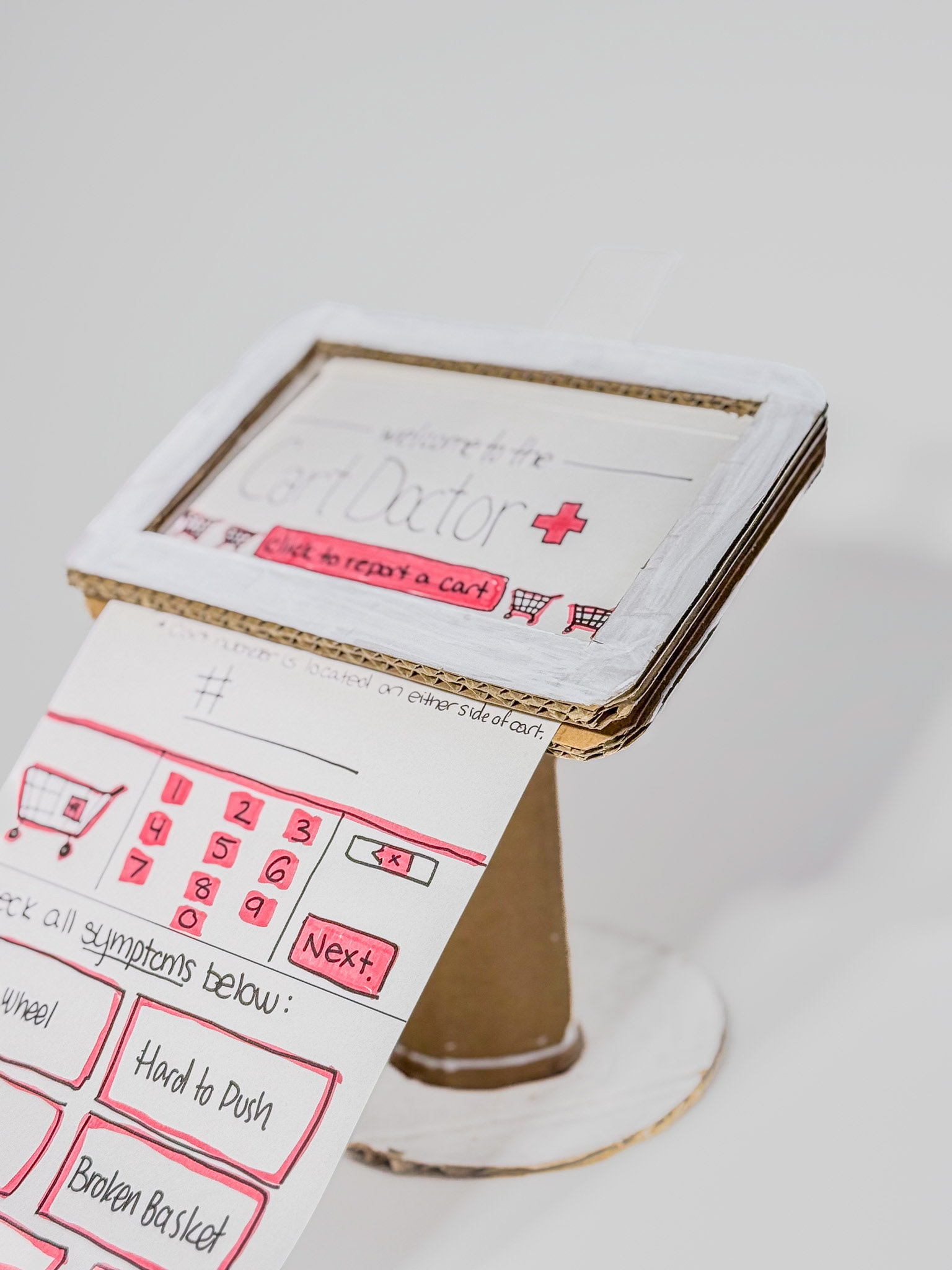
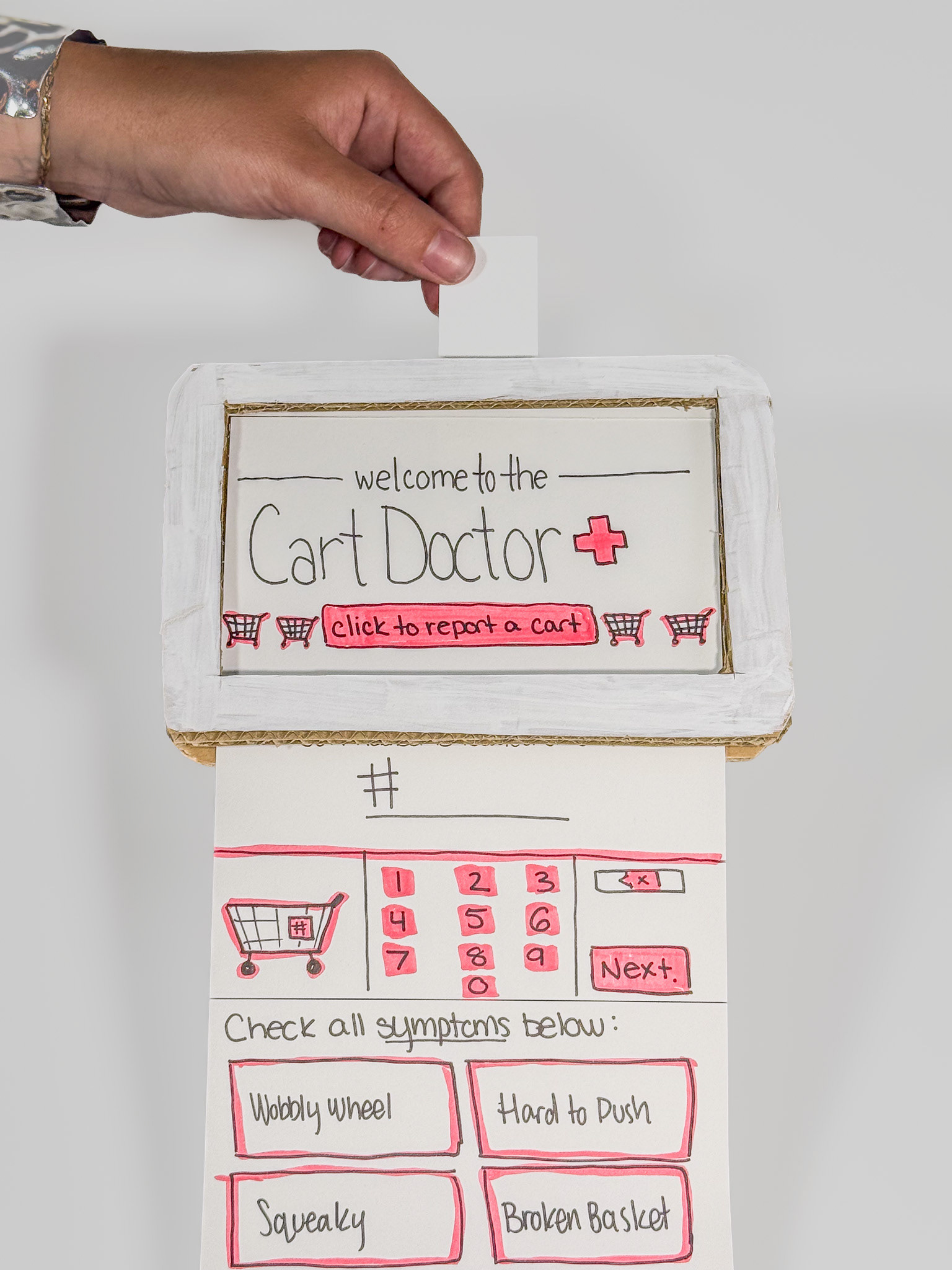
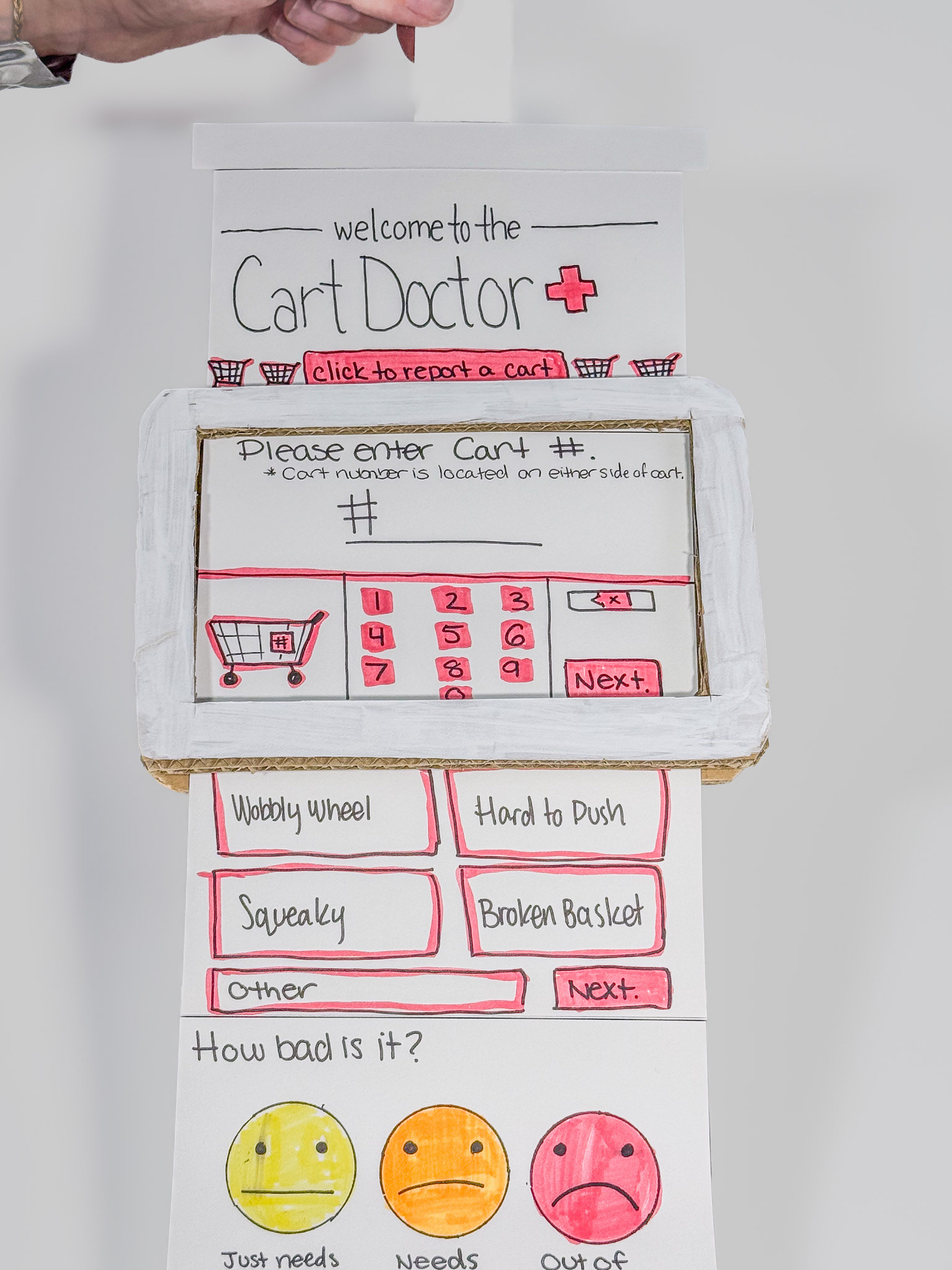
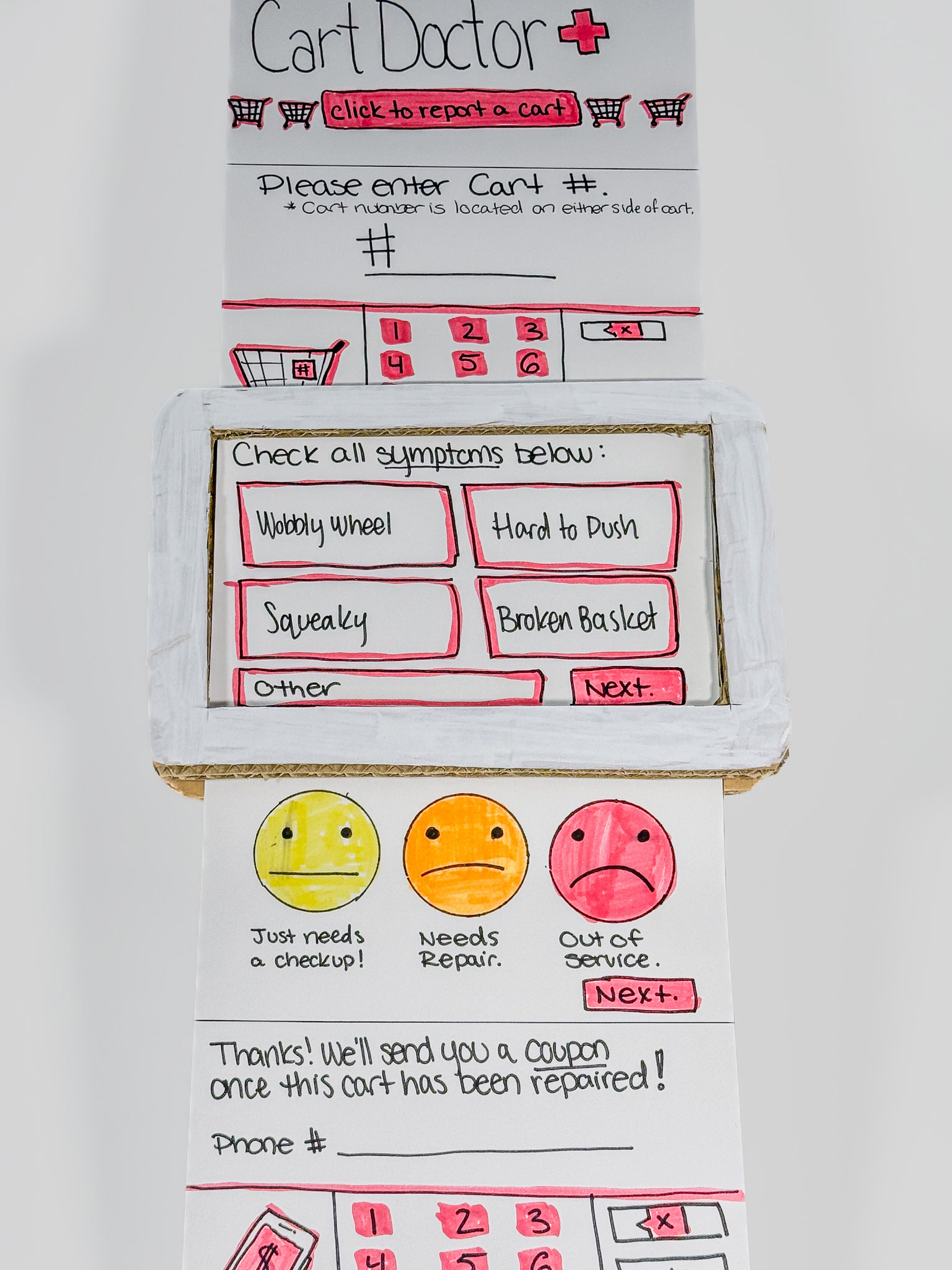
Prototype Sketch
User Testing Reflections:
Qualitative Outcomes
Qualitative Outcomes
Participants found the system cute, fun, and intuitive!
Comments included: “Love it!!” and “I think it works well and makes a lot of sense for the product.”
No-one reported confusion with any screens, instructions, or steps, which suggests the flow is very clear!
One person suggested adding accessibility options for users who may have difficulty reading text.
Quantitative Outcomes
No screens or steps were seen as confusing.
3 of 3 rated the purpose of the Cart Doctor system as clear.
Instructions on the tablet and the step-by-step reporting process were rated highly!
Most useful features were split between: selecting specific cart symptoms, the severity rating system, and the rewards for reporting (each receiving 1 vote)
The prototype was viewed as clear and intuitive, and even first-time users understood the concept easily.
Future Applications:
Physical Prototyping
Translate the interactive system into a tangible guide or tool attached to real carts—so users can experience repair instructions in-context.
Translate the interactive system into a tangible guide or tool attached to real carts—so users can experience repair instructions in-context.
Expanded Diagnostics
Incorporate additional failure modes (wheels, handles, baskets) with clear visual cues, enabling users to troubleshoot more complex issues.
Incorporate additional failure modes (wheels, handles, baskets) with clear visual cues, enabling users to troubleshoot more complex issues.
Digital Integration
Develop a mobile or kiosk version that provides step-by-step repair instructions, augmented reality overlays, or QR-code access for quick guidance.
Develop a mobile or kiosk version that provides step-by-step repair instructions, augmented reality overlays, or QR-code access for quick guidance.
User Testing & Iteration
Conduct usability testing with a broader audience to refine instructions, interaction flows, and feedback mechanisms—ensuring clarity and accessibility.
Conduct usability testing with a broader audience to refine instructions, interaction flows, and feedback mechanisms—ensuring clarity and accessibility.
System Scalability
Explore adapting the Cart Doctor system to other shared or public-use objects—like bikes, scooters, or library carts—turning everyday frustrations into teachable, actionable interactions.
Explore adapting the Cart Doctor system to other shared or public-use objects—like bikes, scooters, or library carts—turning everyday frustrations into teachable, actionable interactions.